
5 Quick Tips for b/d Reversals in Print
When talking about dyslexia, one of the most common questions that I receive from parents and educators alike is about letter reversals. While many people identify reversals as a dyslexic trait, we must remember that this is not a primary inclusionary characteristic of dyslexia. Dyslexia is described as a language-based learning disability (difference) marked by difficulties in efficient word reading, decoding, and spelling, as evidenced by low accuracy or automaticity in reading. Often this is a result of difficulties with phonological skills and, for some, broader language skills.
So why do some students have reversals? And what does this mean for instruction?
Think of a pair of scissors. When we see a pair of scissors, it remains a pair of scissors no matter the positioning. Orientation has no impact. However, in letters, a specific symbol orientation represents a sound or a set of sounds in our language. This is referred to as mirror invariance and serves us well in the world; however, when it comes to reading, we need to make some shifts.
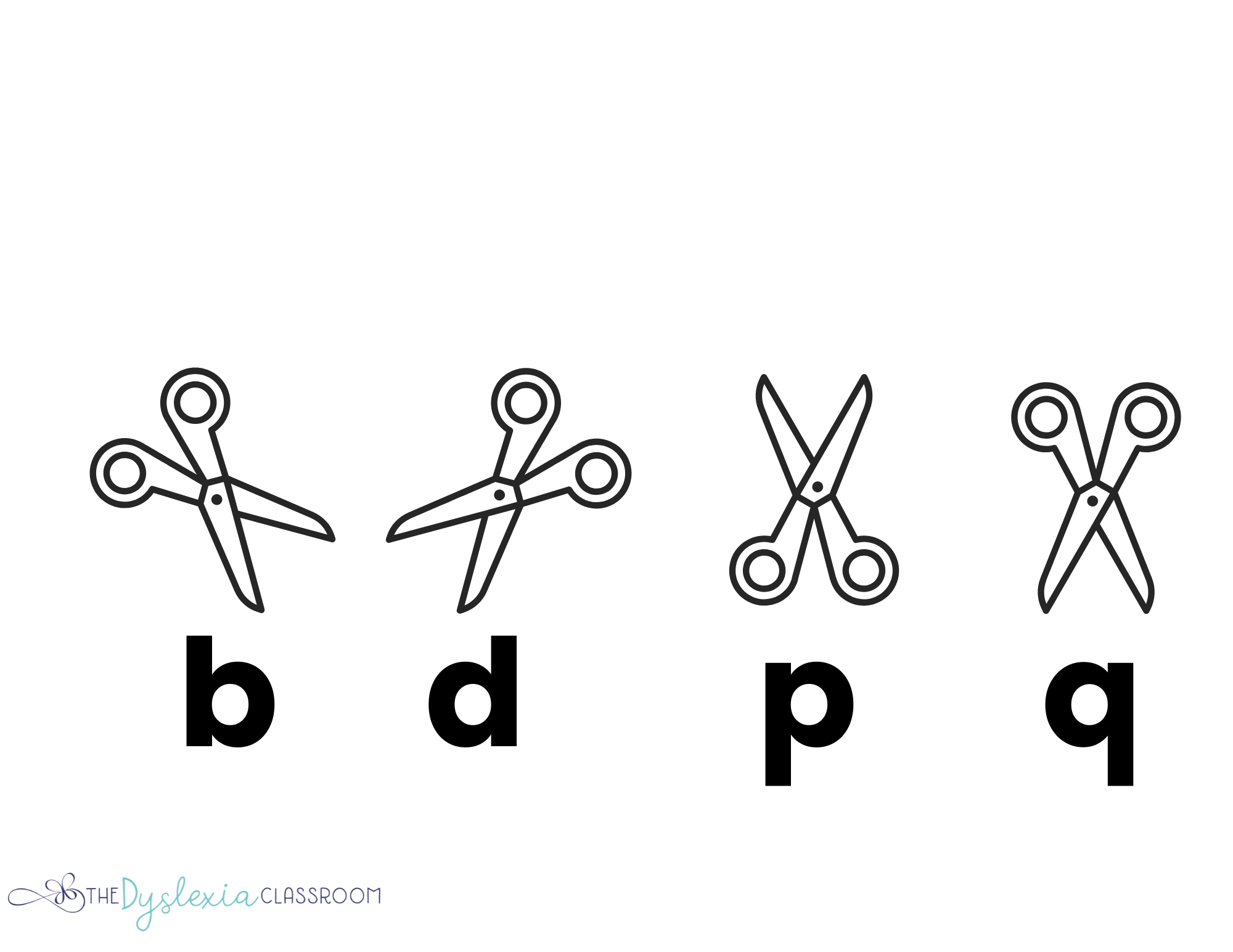
When students are introduced to the written symbols in our language system, the letters, they have to unlearn this mirror imaging ability built into our brains. When young readers misread "saw" for "was" and "b" for "d", they are still in the process of unlearning this.
Many children reverse letters as they begin to learn to read and write. As students learn letters and handwriting skills, we may see letter reversals until age 7 to 8. This is a normal age range for children to still have some reversals in their handwriting. Backward writing and reversals are common at the early stages of writing development for both dyslexic and non-dyslexic learners. It takes our brains time to integrate all of the skills needed to form letters correctly and automatically.
Handwriting should be an important part of the early literacy curriculum. Children should have ample opportunities to practice letter strokes in multi-sensory ways to build automaticity.
"Of all the knowledge and skills that are required to write, handwriting is the one that places the earliest constraints on writing development. If children cannot form letters - or cannot form them with reasonable legibility and speed - they cannot translate the language in their minds into written text. Struggling with handwriting can lead to a self-fulfilling prophecy in which students avoid writing, come to think of themselves as not being able to write, and fall further and further behind their peers." (Graham, S., 2009-2010, p. 20)
When working with students with dyslexia, I have certainly had students come to me who need additional practice with letter recognition and orientation. Here are some quick tips for helping students with b/d confusions if teaching students to print.
b/d Confusion Tip #1
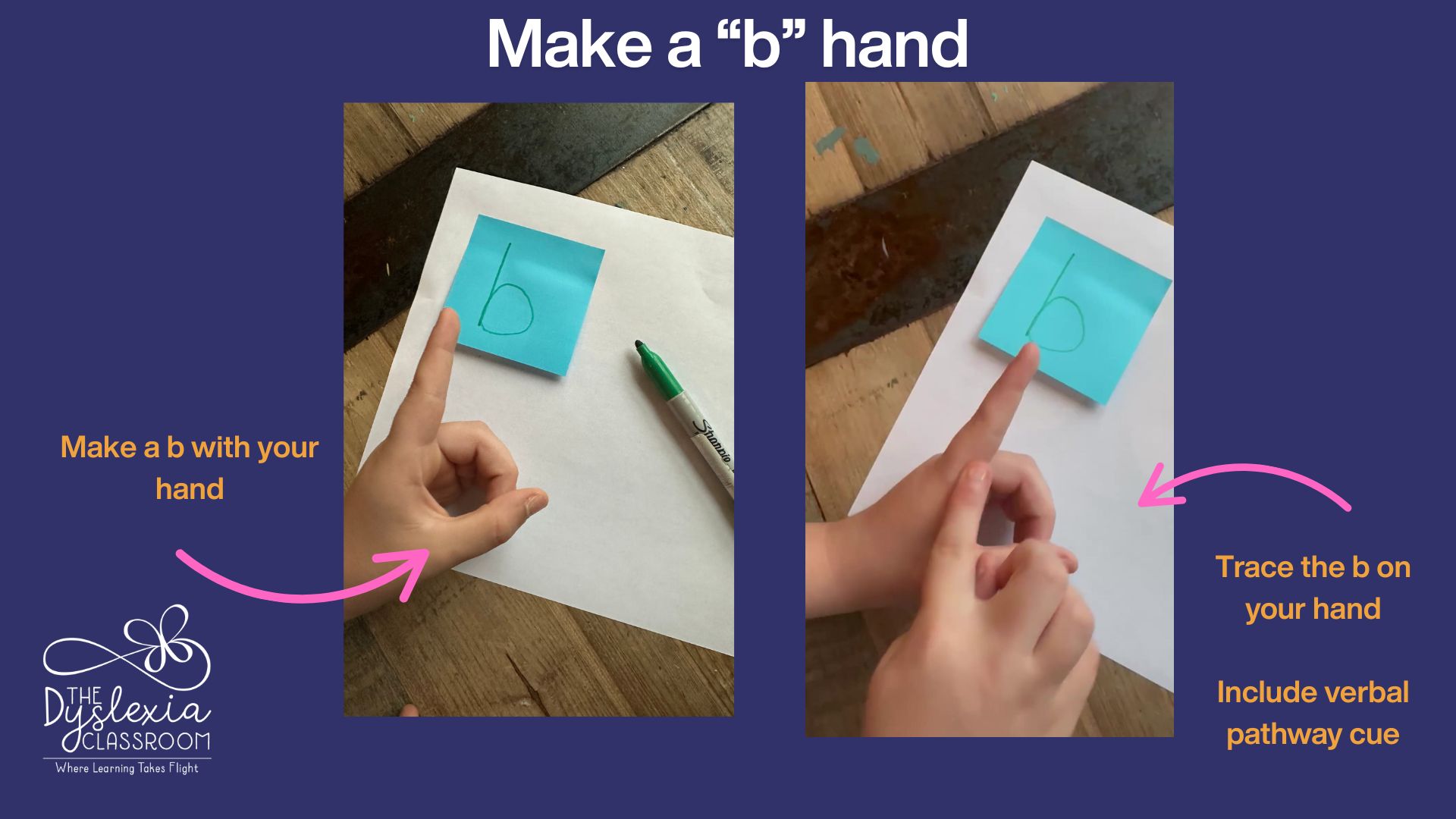
Focus on the “B” hand. One of the easiest strategies that I use is to help students identify their “B” hand. Often, I see teachers having students make a b and a d with their hands. For our students who struggle with letter reversals, I have found that doing both can be confusing for some, whereas focusing only on the “B” hand helps them know that if it is not a b, it is a d. This simplifies the process and removes the added cognitive demand of trying to determine which is which. Instead, we focus on the “B” hand. For this strategy, students use their left hand to form a “b” by holding up their pointer finger and folding the remaining fingers to make a visual “b”. Then, have students trace this “b” hand several times. *Be sure to add in the verbal pathway cue when the student is tracing or writing the letter, such as “straight line down, up, and around; b"
Bonus Tip
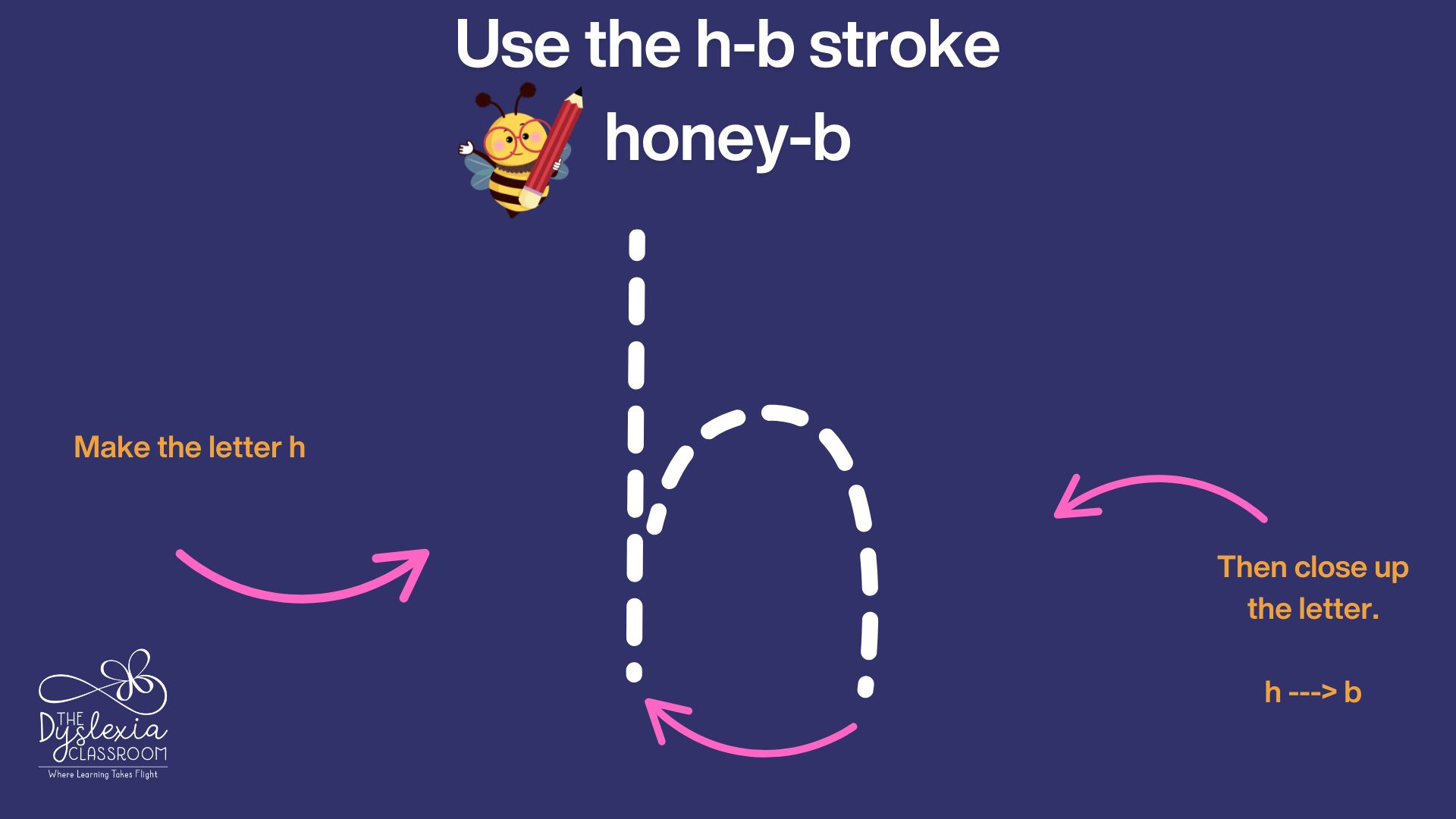
For some students, you can use the h-b approach, or the “honeybee” letter formation. Start at the top line and make a lowercase h, then close the h at the bottom to make a b. Honey-b letter!
b/d Confusion Tip #2
Use the “B” hand as a visual for immediate corrective feedback. When a student misreads b/d, I will have them “check their B hand”. Students will hold up their “b” hand to aid them in the identification of the letter when reading. This easy corrective feedback provides students with a strategy they can use in interventions, classroom work, and at home.
b/d Confusion Tip #3
Place a bracelet on the left hand to aid in “B” identification. Much like the “B” hand formation, placing a bracelet just on the “B” hand, brings the attention to one letter instead of two. Students can check their “B” hand with the bracelet and determine if the letter is a b/d.
b/d Confusion Tips #4
Provide ample opportunities for practice in letter identification and sound recall with those letters students tend to reverse. We know that the knowledge of letter names and fluency of letter naming in kindergarten are among the best predictors of later reading success (Catts et al., 2015). Letters are the anchors for the sounds within our spoken language. We want to ensure that we provide the proper instruction and ample practice for students to become automatic with letter recognition and sound production.
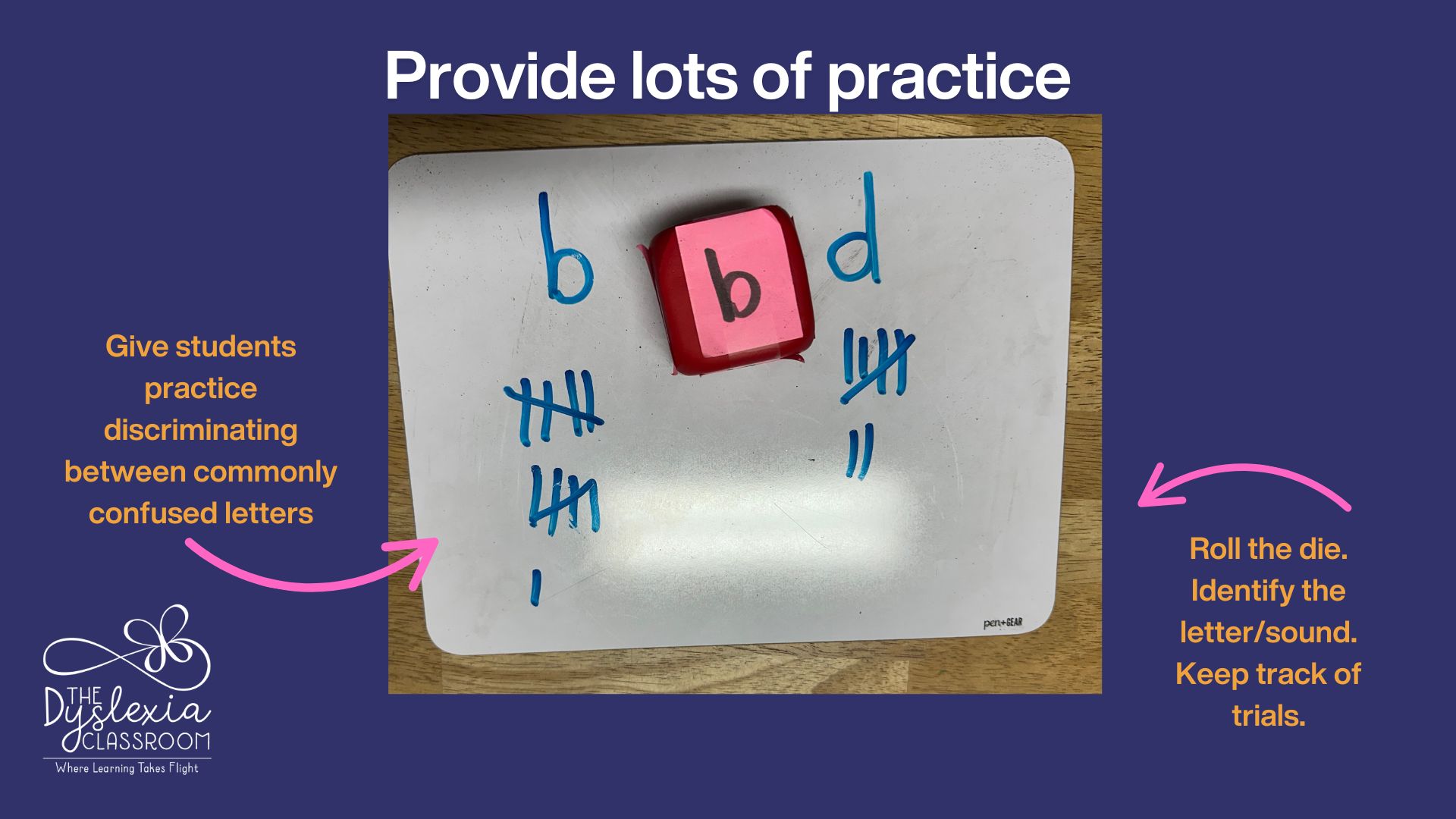
*Easy way to increase # of trials in commonly confused letters. For students who have a pattern of errors in these letter confusions, simply write the letters on a die. The student rolls and identifies the letter name, sound, or both. Give a tally for correct response within a set time frame. This provides you with easy data collection and multiple opportunities for practice.
b/d Confusion Tip #5
Explicitly teach the letter formation focusing on identifying and noticing the differences in letters and their form/shape. This letter perception involves the visual analysis of letters. This form of consistent knowledge helps students discriminate between b/d, was/saw, and other similar forms. Providing explicit instruction in letter formation is an important part of early literacy instruction and interventions. Children should have ample opportunities to practice letter strokes in multi-sensory ways to build automaticity.
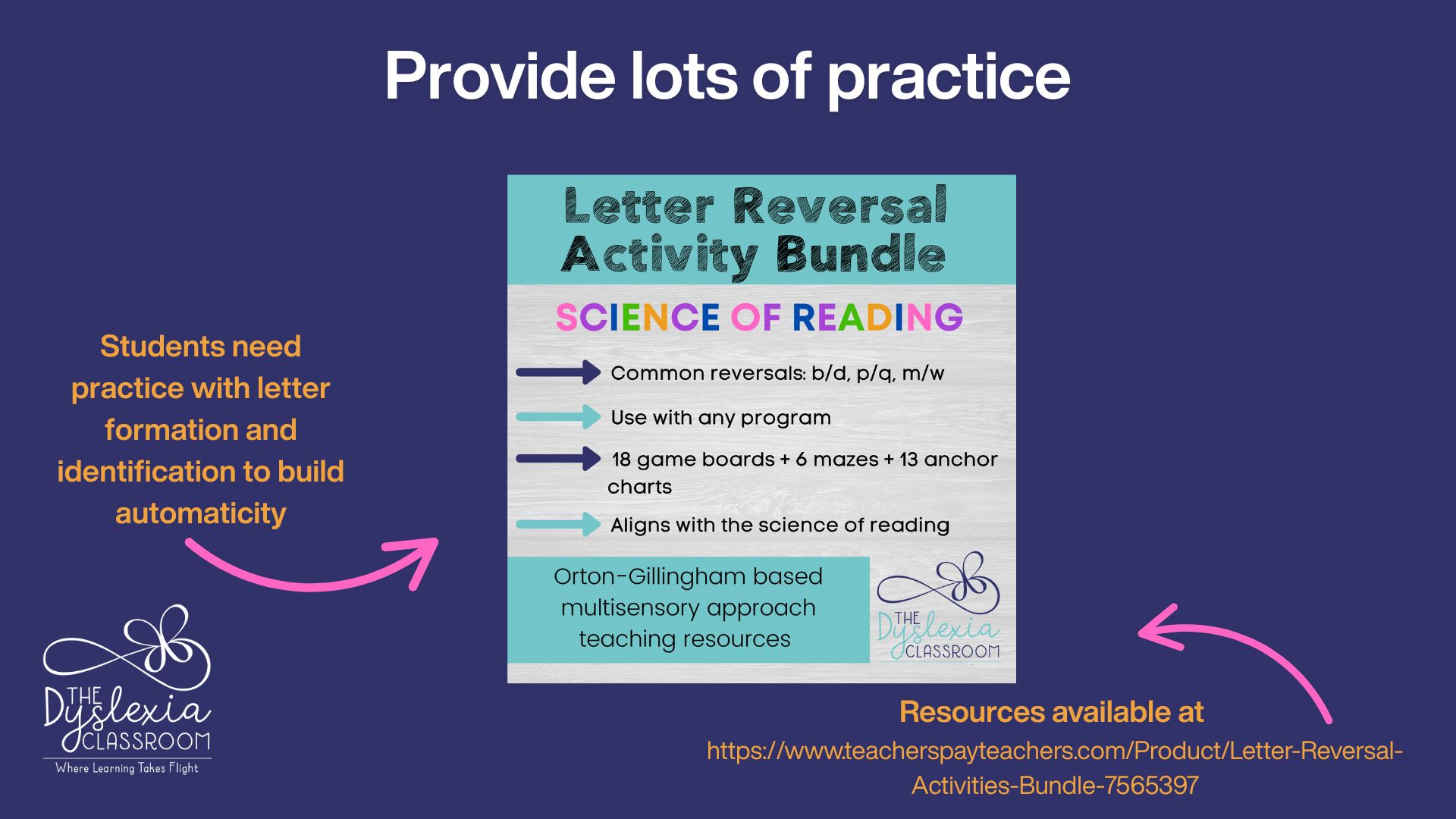
These specifically designed cards help you center your instruction on explicit letter instruction in addition to a speech-to-print approach, provide you with an embedded keyword and mouth formations, and 24 print-and-go activities! Easy to use for whole-group instruction, small group, 1-on-1 intervention, and more!
These specifically designed cards help you center your instruction on explicit letter instruction in addition to a speech-to-print approach, provide you with an embedded keyword and mouth formations, and 24 print-and-go activities! Easy to use for whole-group instruction, small group, 1-on-1 intervention, and more!
Want more information? Check out these two blog posts
Have you tried any of these scaffolds to teach students who struggle with reversals?
This information is the intellectual property of @2016 The Dyslexia Classroom®. Do not use or repurpose without expressed permission from The Dyslexia Classroom®. Please email Casey@thedyslexiaclassroom.com for permission, and give The Dyslexia Classroom® an attribution if you use, reference, or quote/paraphrase copyrighted materials. This includes but is not limited to blogs, social media, and resources.

Hey there!
My name is Casey Harrison
Welcome to The Dyslexia Classroom's blog. I'm a Certified Academic Language Therapist, Dyslexia Therapist, and creator of The Dyslexia Classroom. My passion is to help educators and parents understand their dyslexic learners to help them reach their fullest potential. I'm glad you are here!
Recent Posts

Join The Dyslexia Classroom!
Subscribe to access the freebie library and be the first to know about courses, resources, updates, tips and more!
Categories
All Categories